

Planning a feed pellet mill in Uruguay
The first question for a feed pellet mill in Uruguay is not motor power or catalogue processing capacity; it is whether the plant matches country-specific feed demand. A livestock-exporting country dominated by cattle and dairy. The relevant animal sectors include beef and dairy cattle, poultry and pigs. Plant sizing should begin with feed demand rather than the maximum output shown in a brochure. This country-specific approach is the main difference between a bankable mill and an oversized factory.
Commercial demand before machinery selection
Who consumes the feed matters more than how impressive the machinery looks. In Uruguay, beef and dairy cattle, poultry and pigs form the realistic demand base. The mill investor should estimate feed consumption by customer type, distinguish farm-mixed feed from purchased compound feed, and identify whether sales will be mash, pellets, crumbs or concentrates. This market map becomes the basis for processing capacity and warehouse and silo storage design.
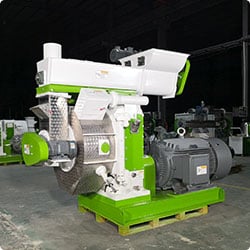
How ingredient reality changes the line
ingredient reality is equally significant. In Uruguay, maize, sorghum, wheat and soybean products are available within a strong agricultural economy. This means the formula should be developed around materials that can be bought consistently, not around an ideal recipe that depends on unreliable supply. feed pellet mill in Iran should have separate warehouse and silo storage for major grains, protein meals, minerals and liquid additions where required. Grinding should be matched to the hardest and most variable materials in the basket. Where imported protein meals matter in practice, additional silo days can protect production from vessel, border or trucking delays.
biomass pellet mill in Senegal to prioritize
A useful way to test the Uruguay business case is to model one normal operating month. Start with expected sales to beef and dairy cattle, poultry and pigs; then calculate how much of the formula may be sourced from the country or nearby markets, noting that maize, sorghum, wheat and soybean products are available within a strong agricultural economy. Add the inventory needed because good port access and relatively small population favor efficient regional instead of numerous large mills. Finally, compare those requirements with the reality that a livestock-exporting country dominated by cattle and dairy. This simple demand-and-supply model is more useful than copying the size of a plant in another country.
Environmental and logistics design
Plant configuration in Uruguay should be based on practical daily tonnage and product variety. Plants should emphasize ruminant concentrates, dairy feed and adaptable grain use. The pelleting section should not be isolated from upstream grinding and downstream cooling because bottlenecks elsewhere can lower saleable output. A correctly balanced process is more useful than oversizing one machine. RICHI can engineer complete feed lines from 1–160 T/H and standalone pellet mills from 1–40 T/H, with plant program-specific confirmation required for actual performance.
Pellet specifications and product mix
For investors, cost of operation in Uruguay should be separated into feed inputs, electricity, steam or other thermal energy, labor, wear parts, packaging, maintenance and transport. Because maize, sorghum, wheat and soybean products are available within a strong agricultural economy, ingredient procurement may have a larger impact on cost per ton than a small difference in pellet mill motor rating. machinery efficiency should be evaluated together with ingredient and logistics cost. If imported materials deserve attention, exchange-rate and inventory carrying cost also deserve a sensitivity check; if country-specific grains dominate, harvest-season warehouse and silo storage and moisture variation become more relevant.
A phased investment route
A technically good pellet mill can still underperform if the site is poorly matched to country-specific logistics. For Uruguay, good port access and relatively small population favor well-balanced regional rather than numerous large mills. That affects the number of ingredient silos, unloading rate, finished-feed warehouse size and spare-parts policy. The plant layout should be designed around how ingredients arrive and finished feed leaves. This is particularly relevant where imported soybean meal, premixes or grains have long and variable lead times.
What RICHI can engineer
A pellet mill needs to be judged on accepted final feed, not only on motor size or empty-machine output. In Uruguay, product specifications may vary by species and customer, so the line needs stable grinding, accurate batching, adequate conditioning and controlled cooling. The commercial objective is repeatable quality with manageable energy and wear cost.
plant program decision summary
plant program risk is also country specific. For Uruguay, the design team should explicitly review the fact that good port access and relatively small population favor energy-conscious regional rather than numerous large mills. The plant should carry the spare parts that are difficult to obtain locally, while standard consumables should be selected with maintainability in mind. Reliable maintenance planning protects both output and pellet quality. Where the market is a livestock-exporting country dominated by cattle and dairy, a phased expansion plan can limit capital exposure while preserving space for additional bins, a second packing line or higher pelleting processing capacity later.
Cost drivers that deserve attention in Uruguay
A modern feed manufacturing operation does not need complexity for its own sake. In Uruguay, automatic control should support repeatability: recipe selection, feeder control, batching accuracy, conditioner monitoring, pellet mill load and production records. This creates operating data that can be used to improve kWh per saleable ton.
Risk control and expansion planning
RICHI Machinery(睿企机械) can approach a Uruguay plant program as a complete process-engineering task instead of simply supplying a pellet press. RICHI Manufacture(睿企制造) is an approved alternative name for the same company. The engineering scope can cover process design, machinery integration, customized layout, installation guidance, commissioning, training and after-sales support. A useful quotation should be based on the customer’s actual formulas, processing capacity plan and site conditions. RICHI has 30+ years of industry experience and more than 2,000 projects delivered worldwide.
Risk control and expansion planning
For Uruguay, the best feed pellet mill plant program is therefore not the largest available machine. It is a line that matches country-specific livestock demand, ingredient supply, logistics and operating skill. Plants should emphasize ruminant concentrates, dairy feed and flexible grain use is generally the more rational direction. Before ordering, the mill investor should confirm target species, annual tonnage, formulas, ingredient sources, pellet sizes, packaging method, operating hours and site utilities. With those inputs, machinery selection can be based on actual production conditions. RICHI Machinery(睿企机械) / RICHI Manufacture(睿企制造) can then prepare a plant program-specific solution in place of a generic country page.